HUMANE RACCOON REMOVAL
Human Raccoon Removal
The term humane raccoon removal is widely used, but rarely explained.
In urban and suburban environments, “humane” does not describe a single action or outcome. It is a framework shaped by animal biology, seasonal behavior, housing structures, municipal regulations, and environmental constraints. What is often presented as a simple or gentle process is, in reality, a set of trade-offs governed by limits that cannot be ignored.
This site exists to explain those limits.
Humaneraccoonremoval.ca documents how raccoon behavior, reproductive cycles, den fidelity, and urban adaptation influence what can reasonably be considered humane. It examines why certain approaches are restricted by law, why others fail biologically, and why outcomes differ depending on timing, structure, and location. The focus is not on techniques or execution, but on understanding the conditions that shape decision-making in human–raccoon conflict.
Many public discussions treat “humane” as a promise. In practice, it is a constraint.
By explaining recurring patterns observed in cities, housing stock, and seasonal cycles, this site aims to reduce common misconceptions—particularly the belief that all raccoon conflicts have clean, harm-free resolutions. Humane outcomes are often defined not by ideal scenarios, but by minimizing risk, stress, and long-term harm within a narrow set of realistic options.
This is an informational publication.
It does not provide services, instructions, or recommendations.
Its purpose is to clarify how humane raccoon removal is defined, why it is limited, and why those limits matter.
Understanding reality comes before choosing action.
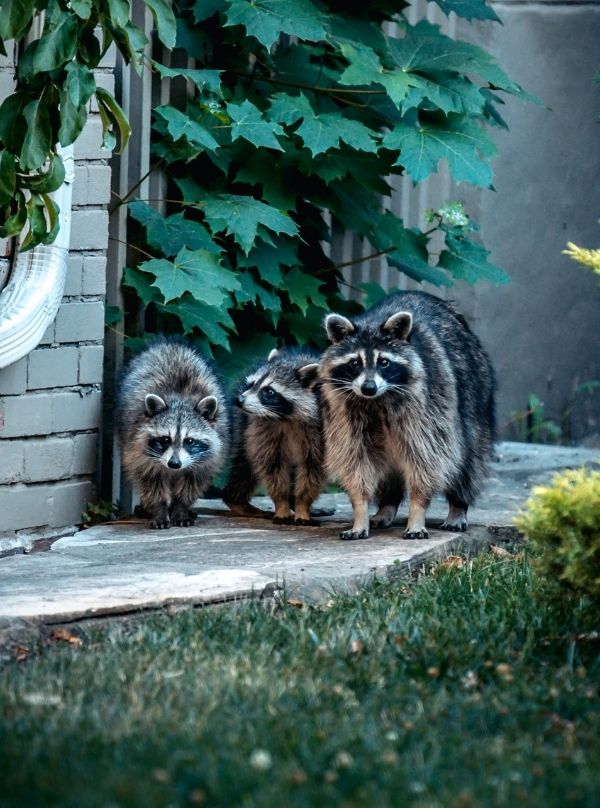
Attics
Decks
Sheds
One Way Door
Baby Raccoon Season
Where do Raccoons Need to Be Removed From
Attics
Raccoons are often the culprit when it comes to noises at odd times. They use force to break into the attic for safety, warmth, and shelter. They will go in and out at any time of the day, but most likely at night where they will look for food. While staying there, raccoon mothers often give birth to raccoon kits which transforms an ordinary attic into a true cesspool with feces and urine scattered all over. The result is contaminated insulation and flooring that need reinstalment. Apart from that, the entire space needs decontamination.
Decks
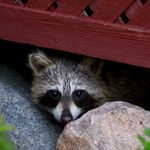
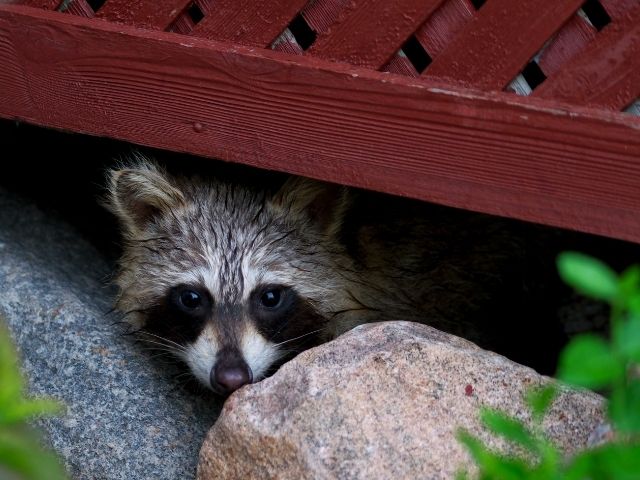
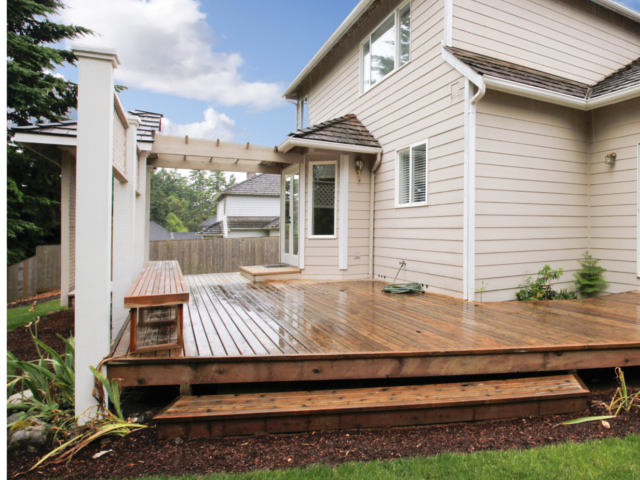
Decks are a great way to see the outdoors right from the comfort of our property. For raccoons though, they offer excellent shielding from the elements as well as predators and give ample space to make themselves very comfortable. On the other side, raccoons are very destructive animals and will use force to break into the base of the deck. Depending on the location of the deck, the raccoon will make a latrine in the yard. A latrine is an outside toilet where the raccoon defecates and urinates. This will create a horrible smell that can permeate the area. The only way to get the raccoon out is through professional intervention.
Sheds
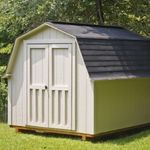
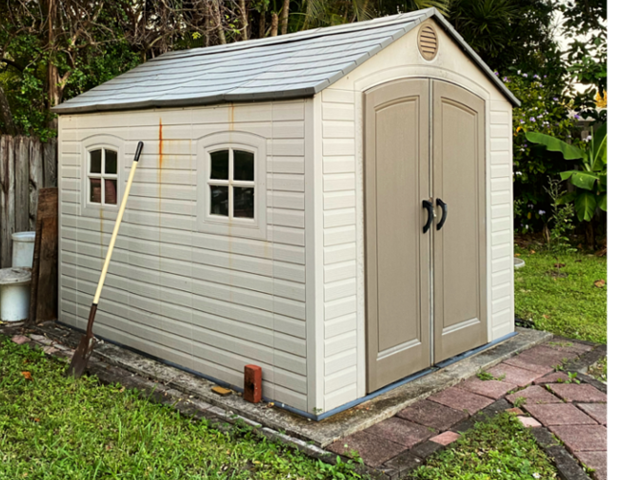
Raccoons love to take advantage of man-made structures, and the shed is certainly not an exception. Raccoons can cause a lot of material damage depending on what is stored in these sheds. A raccoon intrusion can cost homeowners up to thousands of dollars. Sheds are at a higher risk to be of greater financial loss. To protect your valuables, it is important that you recognize the signs and that you contact professional wildlife technicians at once!
The One-Way Door
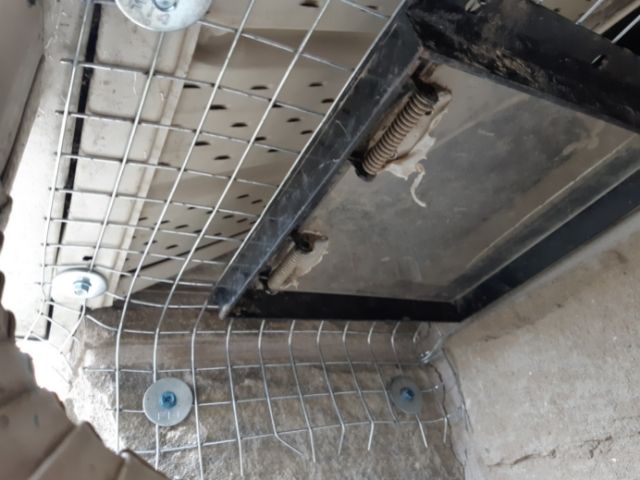
A one-way door (often called a one-way exclusion device) functions as a humane raccoon-management tool because it is designed to end indoor denning without trapping, handling, or relocating the animal, while allowing the raccoon to leave under its own control.
What follows is a thorough, explanatory description of how the mechanism works, why it is considered humane in many contexts, and where its humane claims can break down. I am intentionally keeping this non-procedural (no installation steps, placement instructions, or “how-to” details), consistent with the Micro Layer standard of explaining reality rather than enabling execution.
A one-way door is a directional valve placed at a known exit point between a structure and the outdoors. Its core property is simple:
It permits egress (outbound movement).
It prevents re-entry (inbound movement).
Mechanically, it achieves this with a movable element (flap, tube gate, gravity-swing panel, or spring-biased gate) that opens easily when pushed from the inside but does not open (or does not align) when pushed from the outside.
The important functional detail is that the device is not “removing” the raccoon in the way the phrase sounds. It is altering access so the animal cannot maintain the den relationship with the building.
“Humane” in wildlife conflicts frequently collides with an uncomfortable fact: relocation can be lethal, even when well-intended, due to disorientation, territorial conflict, dehydration, starvation, and separation from offspring. In many jurisdictions it is also regulated or restricted.
A one-way door is “humane” partly because it keeps the animal in its home range, forcing it to shift den sites locally rather than being displaced to unfamiliar territory.
Baby Raccoon Season
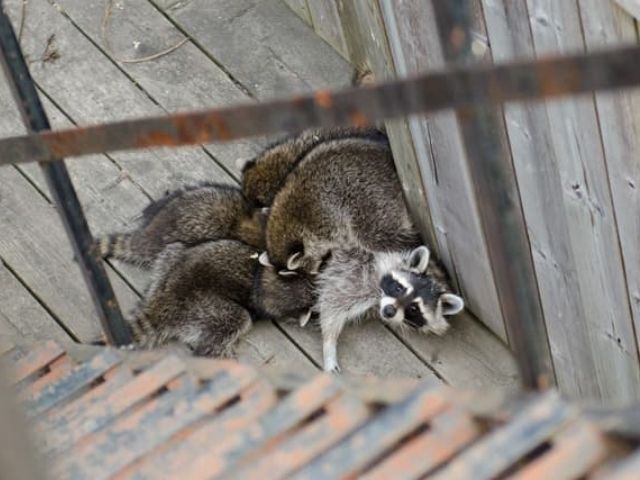
Baby raccoon season typically happens between March and April. Raccoons will mate with each other during the colder winter months. Usually, around this time, the number of break-ins will also rise which will result in increased property damage. The best way to prepare for baby raccoon season is to verify whether your home or business is adequately protected against the raccoons. The best way to go about this is to hire a professional wildlife specialist from Human Raccoon Removal to conduct an exterior inspection to spot weak areas and to have them recommend solutions as needed.
HUMANE RACCOON REMOVAL
What it Means
Humane raccoon removal is often discussed as a promise, but it is better understood as a boundary—defined by biology, structure, season, and law. Tools like one-way doors do not create humane outcomes on their own; they operate within narrow conditions that limit harm rather than eliminate it. By documenting these constraints and the patterns behind them, this site exists to clarify what humane intervention can realistically mean in urban environments, and why those limits should be understood before any action is considered.